

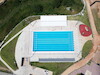
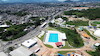
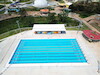
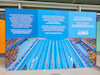
In December 2025, a 50-metre competition pool was inaugurated at Parque Oeste Ana Gonzaga, in Rio de Janeiro’s Zona Oeste. To anyone unfamiliar with its history, it might appear to be a newly built facility. It is not.
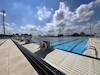
The pool now serving the local community is the same structure that stood at the Olympic Aquatics Stadium during the Rio 2016 Games: the venue where Michael Phelps swam the final Olympic races of his career and where Paralympic champion Clodoaldo Silva secured his place in sporting history. Dismantled after the Games, transported across the city and reassembled within a 234,000-square-metre urban park, the pool retains the same technical specifications it was originally built to: 50 metres in length, 25 metres in width, a uniform depth of 2 metres, and full compliance with international competition standards.
For Myrtha Pools, this is the third completed reinstallation of a temporary pool from Rio 2016 and one of the clearest examples of what modular pool technology can achieve beyond a major sporting event. Designed for precision assembly and long-term durability, the stainless-steel modular structure allows a pool of this scale to be dismantled, relocated and returned to full operation without compromising structural integrity or performance. A facility originally built for the Olympic Games can therefore continue serving local communities for decades after the event itself.
Type
City
Technology
Surface
50 x 25 m
Depth
2 m
Location
Accessories
Managed by Rio’s Municipal Sports Department, the facility now hosts structured aquatic programmes across six age groups, ranging from infant sessions for children as young as three months to youth, adolescent and adult swimming courses, including water aerobics activities. During weekends, the pool also operates as a supervised public leisure facility, with controlled access and safety measures in place.
The project marks the final delivery of Rio 2016’s Olympic sports legacy programme, through which Myrtha’s modular technology has enabled world-class aquatic infrastructure to be redistributed across three different Brazilian cities over nearly a decade.


